In 2026, the government’s strategy for Jhajjar is less about creating a “second Gurgaon” and more about building a complementary industrial twin. While Gurgaon remains the administrative and IT corporate hub, the Haryana government is actively positioning Jhajjar as the state’s logistics and manufacturing powerhouse.
In 2026, the comparison between Jhajjar and Gurgaon (now Gurugram) has shifted from speculation to a tangible development cycle. While Jhajjar is following the “Gurgaon growth blueprint,” it is doing so with a distinct focus on heavy industry and logistics rather than just white-collar services.
Jhajjar is following the footprint of Gurgaon, but with a greener, smarter, and more integrated twist. The future is closer than it looks! 🚀
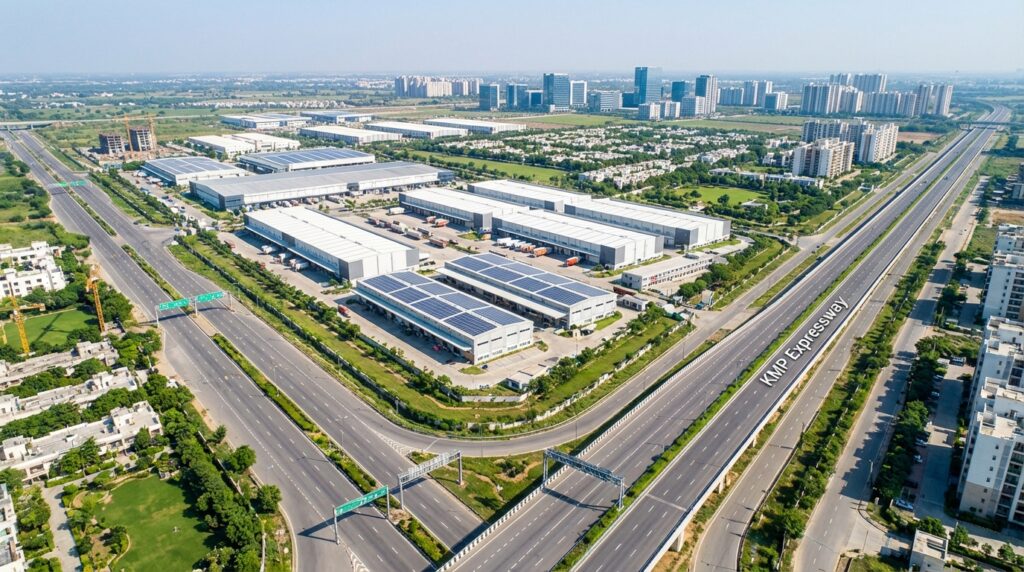
🌉Logistics Power: The region is part of the Delhi-Mumbai Industrial Corridor (DMIC) influence zone.
🏙️Reliance MET City: Spans over 8,000+ acres, making it one of India’s largest private business districts.
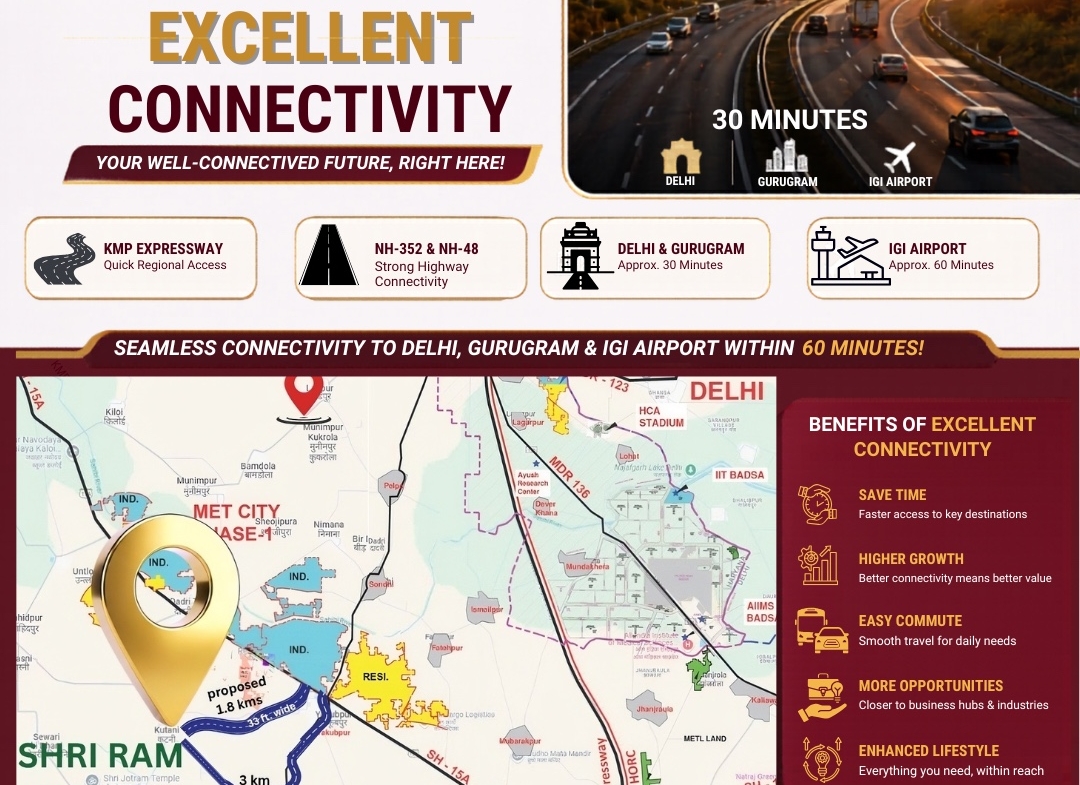
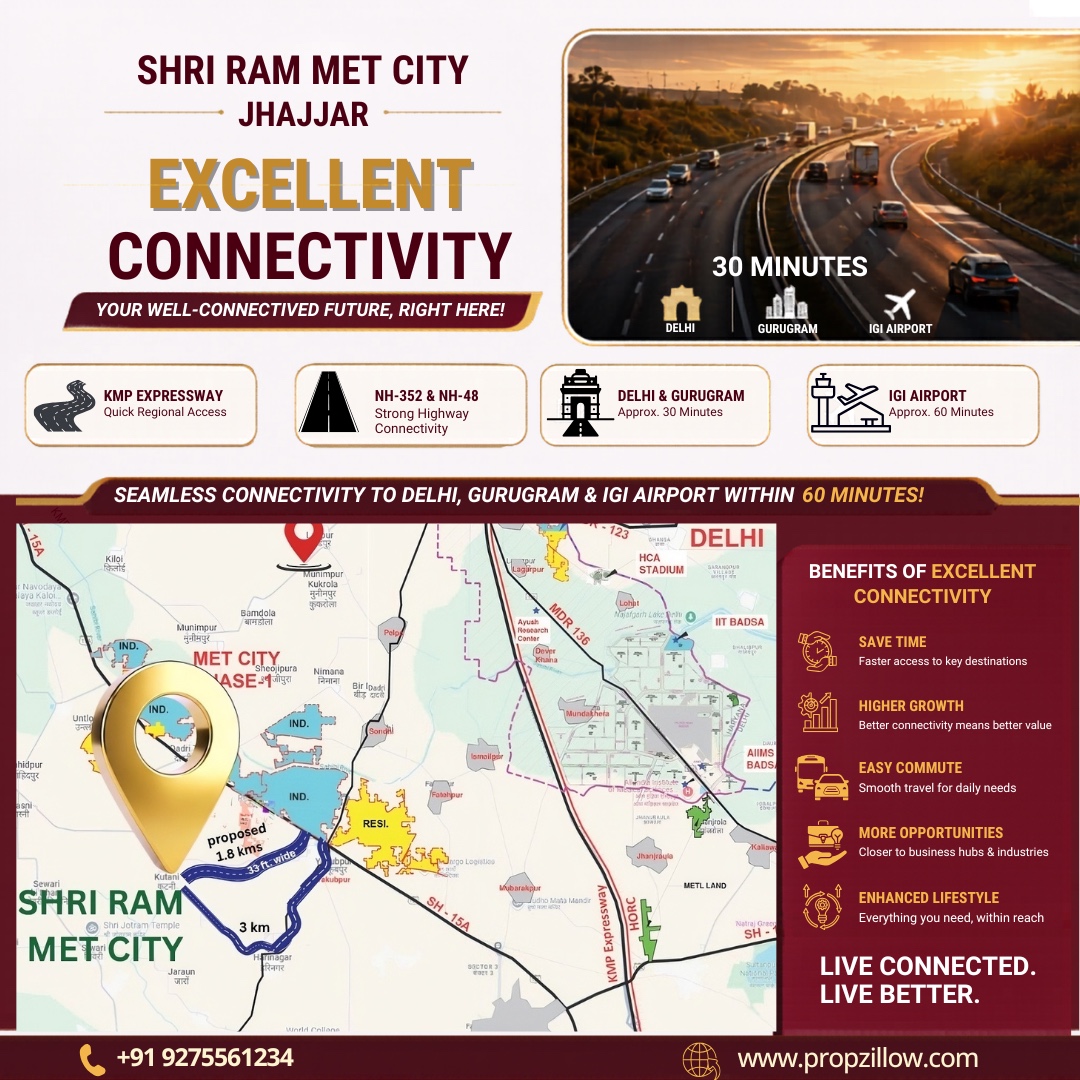
🚝Connectivity: The 2026-2035 vision relies heavily on proximity to the KMP Expressway and the Dwarka Expressway, significantly cutting travel time to IGI Airport to under 45 minutes.
The National Capital Region (NCR) is witnessing a paradigm shift. Just as Gurgaon redefined the corporate landscape of India over the last two decades, Jhajjar is now emerging as the next frontier of high-density integration and innovation.
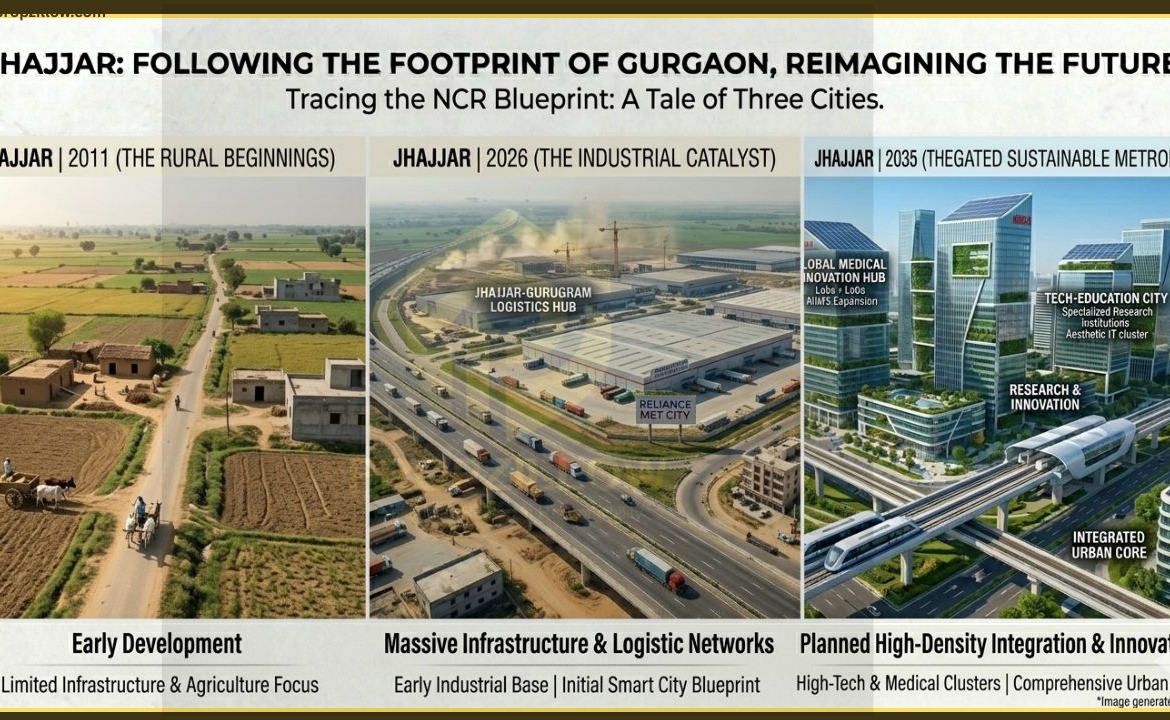
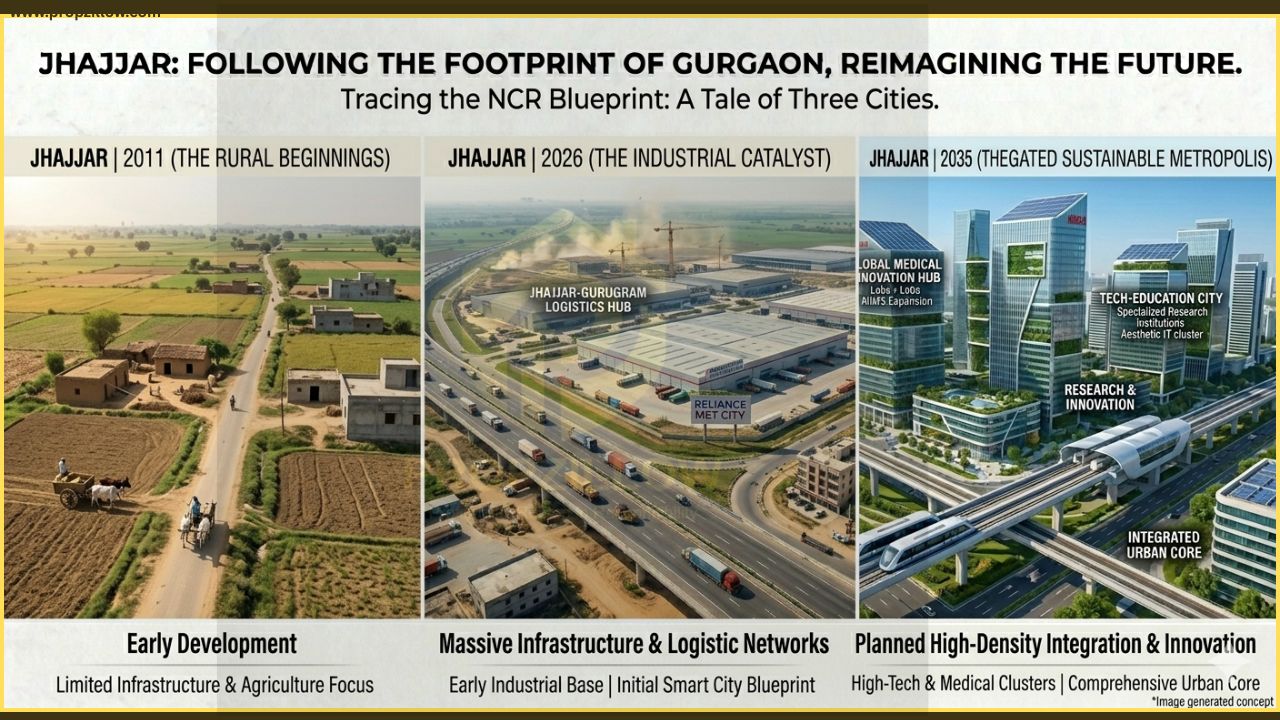
The Three-Phase Evolution🔸
2011: The Rural Foundation – A decade ago, Jhajjar was defined by its agrarian roots. Development was limited, and the economy was driven by local agriculture and small-scale settlements.
2026: The Industrial Catalyst – Today, the transformation is in full swing. With the establishment of the Jhajjar-Gurugram Logistics Hub and Reliance MET City, the region has become a critical node in India’s supply chain. Infrastructure investment has surged, creating a massive industrial base that acts as the region’s economic engine.
2035: The Sustainable Metropolis – The vision for 2035 represents a “Gated Sustainable Metropolis.” This includes specialized global medical innovation hubs, tech-education cities, and integrated urban cores connected by high-speed transit.
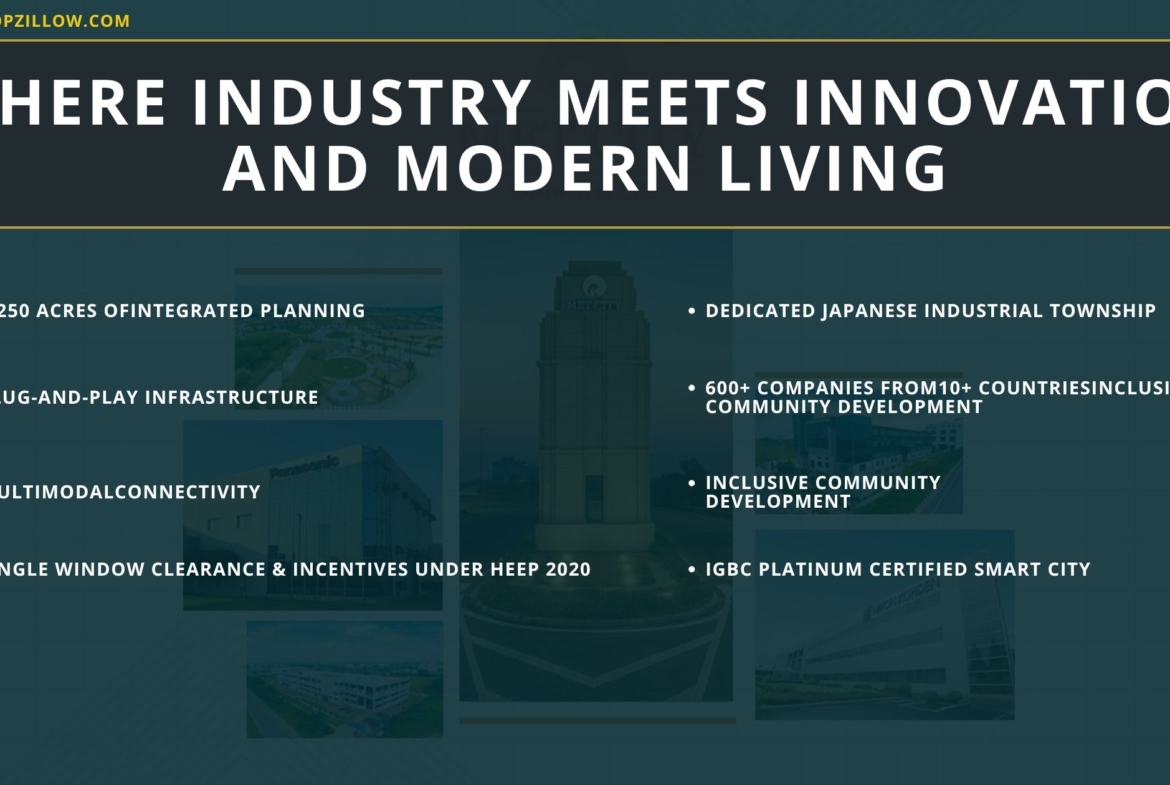
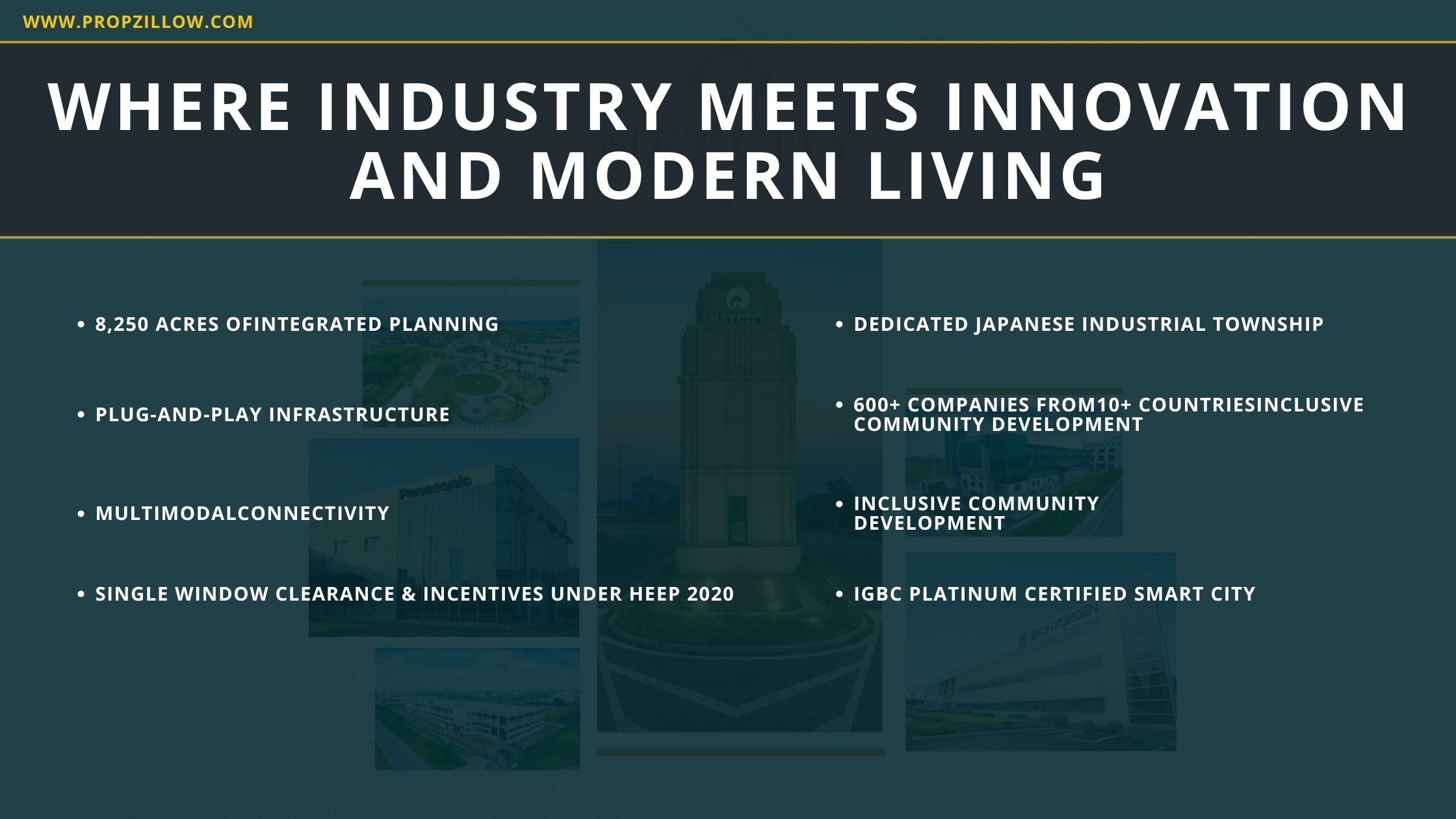
Reliance MET City (Model Economic Township) is no longer just a “project on paper”; as of 2026, it has become a massive 8,250-acre reality that is fundamentally shifting the economic gravity of the National Capital Region (NCR) toward Jhajjar. Reliance MET City is a massive, next-generation integrated township developed by Model Economic Township Limited, a 100% subsidiary of Reliance Industries Limited.
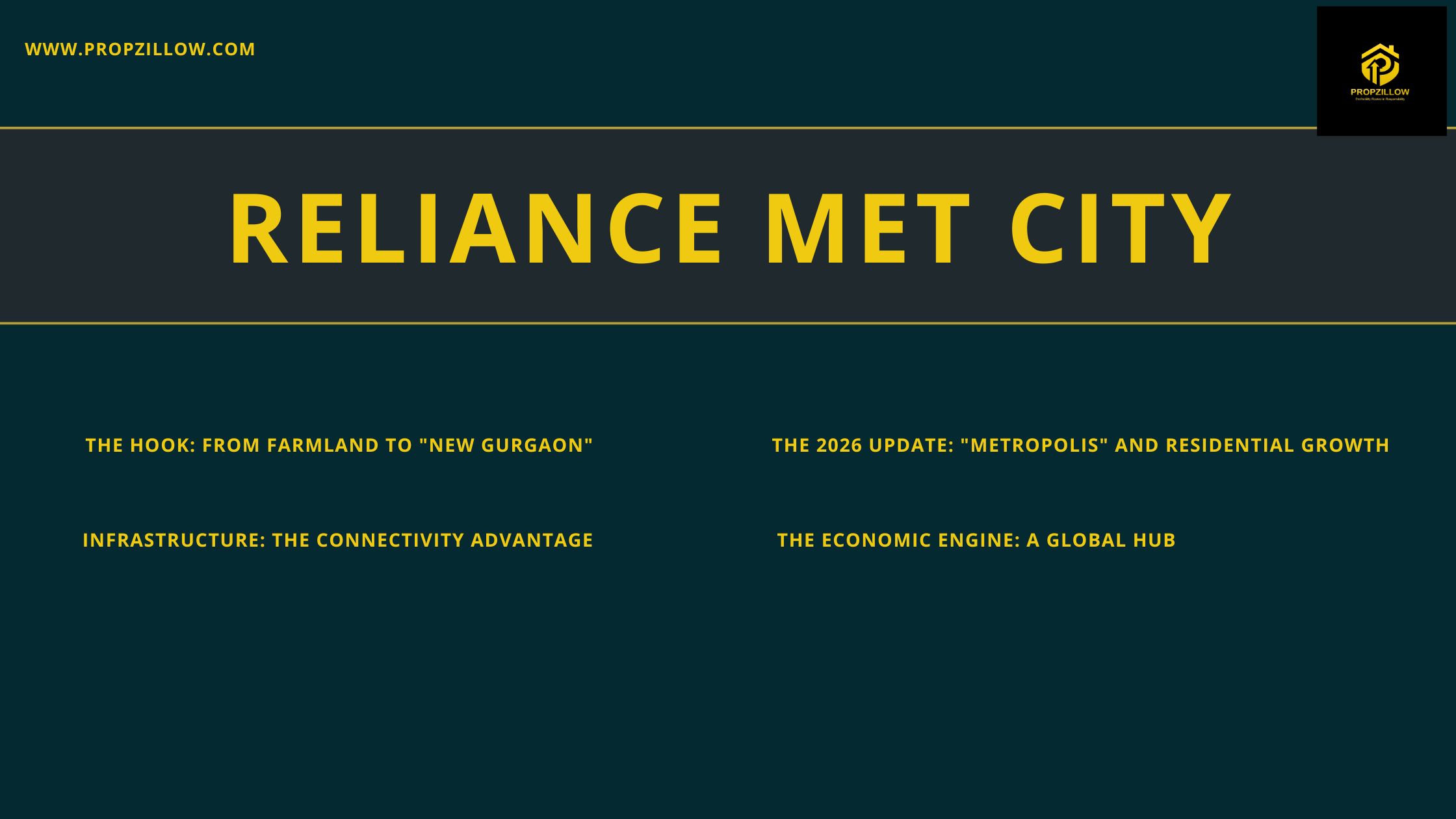
The Hook: From Farmland to “New Gurgaon”
Start by describing the visual transformation. Jhajjar was once known primarily for its agricultural roots. Today, it hosts an IGBC Platinum-rated integrated smart city.
Key Stat: It’s one of the largest privately developed integrated townships in India.
The Narrative: Reliance MET City isn’t just an industrial zone; it’s a “Walk-to-Work” ecosystem designed to rival the infrastructure of global cities.
The Economic Engine: A Global Hub
Explain why the transformation is happening. It’s the sheer scale of the companies moving in.
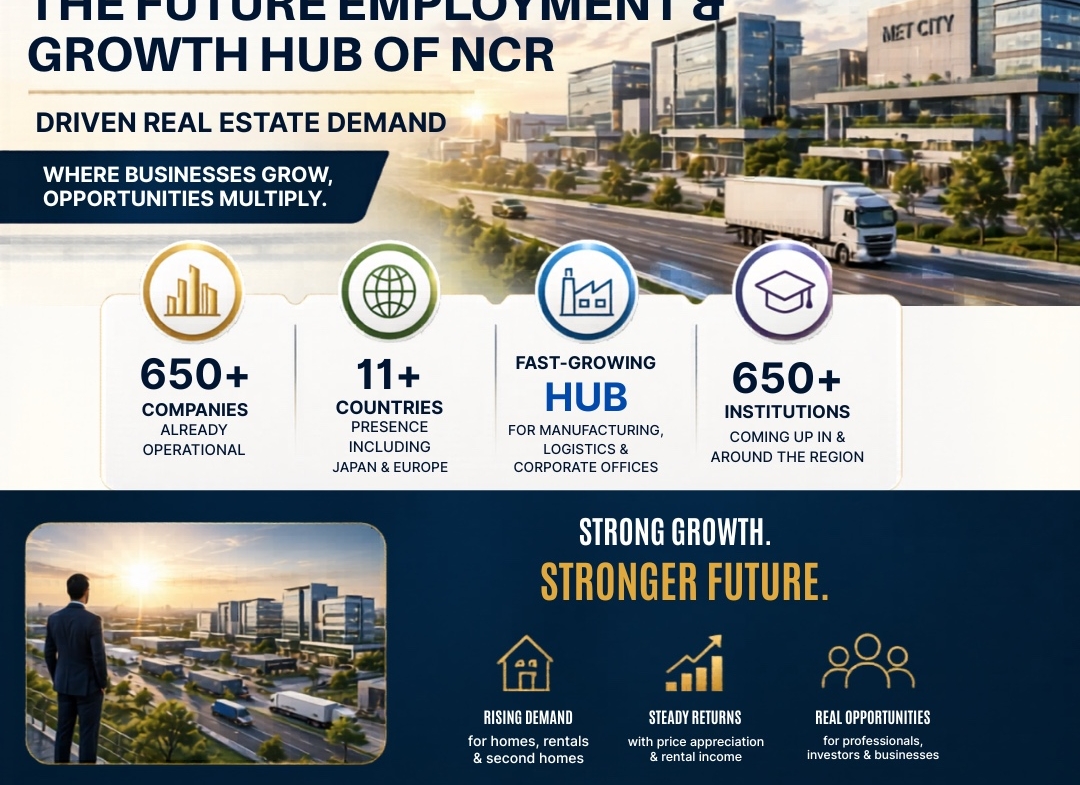
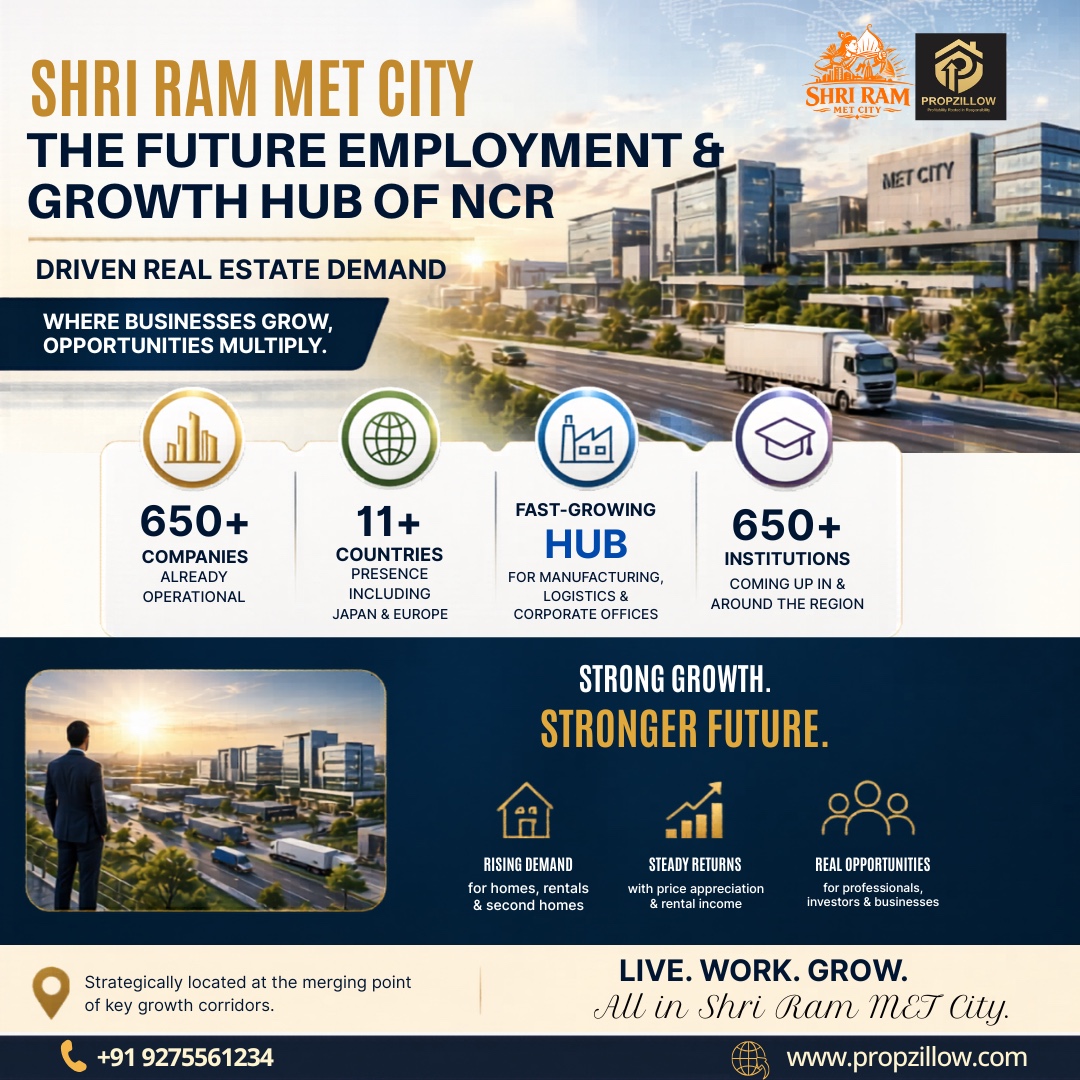
Global Footprint: Mention that it hosts more than 650+ companies from 10+ countries.
The “Japanese Connection”: Highlight the Japan Industrial Township (JIT) within MET City, home to giants like Panasonic, Denso, and Nihon Kohon.
Anchor Tenants: Other major players include FM Logistic, Reliance Retail, and various automotive leaders, which have collectively created over 40,000 jobs.
Infrastructure: The Connectivity Advantage
The “Transformation” isn’t an accident; it’s driven by the KMP (Kundli-Manesar-Palwal) Expressway.
Logistics Powerhouse: It features a Private Freight Terminal (PFT) and is a crucial node for the Delhi-Mumbai Industrial Corridor (DMIC).
Smart Utilities: Focus on the “uninterrupted” aspect—220 KV substations for 24/7 power and SCADA-controlled water systems. This is a massive draw for industries tired of the power cuts in older industrial hubs.
The 2026 Update: “Metropolis” and Residential Growth
Metropolis Launch: In early 2026, Reliance launched “Metropolis by MET City,” a 140-acre mixed-use development within the township.
The “Walk-to-Work” Lifestyle: Explain that they aren’t just selling plots; they are selling a lifestyle where a factory manager or tech worker lives 5 minutes from their office.
Social Infrastructure: Mention proximity to AIIMS Badsa and the upcoming Haryana Orbital Rail Corridor.
Why Jhajjar?
Jhajjar is benefiting from the “overflow” of Gurgaon.
Price Arbitrage: Residential and industrial plots here are significantly more affordable than in Gurgaon, yet the connectivity (via the Dwarka Expressway and KMP) makes them nearly as accessible.
Investment Potential: With the proposed BCCI International Cricket Stadium nearby, the area is seeing a speculative boom similar to what Gurgaon saw in the early 2000s.
MET City’s Vision Beyond Infrastructure
Our commitment goes beyond infrastructure. At MET City, we prioritize
Sustainability:
Through green zones, energy efficiency, water management, and eco-conscious design
Community Empowerment
Through skill training programs and development across 22 surrounding villages
Walk-to-Work Lifestyle
Encouraging productivity, wellness, and reduced emissions
Global Integration
Attracting investments and partnerships from across the world