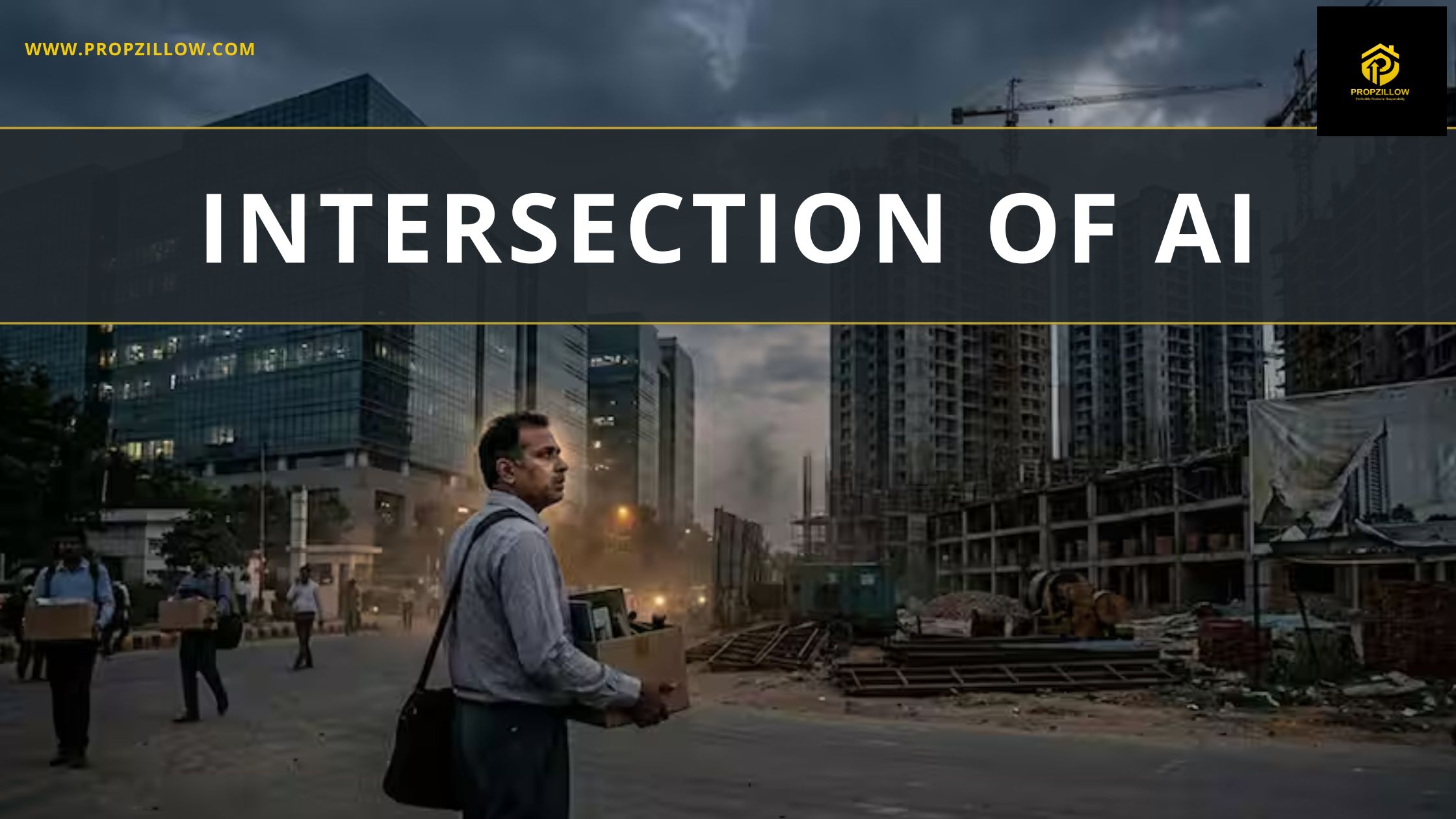
This is a timely and provocative topic. The intersection of AI job displacement and the real estate market is a growing conversation as we head into mid-2026.
For decades, real estate developers considered the “IT professional” to be the ideal candidate. With high disposable incomes, stable career trajectories, and a penchant for premium urban living, the tech sector was the primary engine driving housing demand in hubs like Bengaluru, San Francisco, Hyderabad, and Austin.
However, in 2026, the engine is experiencing a slowdown. As generative AI moves from “cool tool” to “corporate cost-cutter,” the IT sector is witnessing a structural shift. The focus has shifted from automation to a fundamental reduction in headcount, causing shockwaves across various industries, from office cubicles to construction sites.
📉 The Tech Squeeze: More Than Just a Rough Patch
Unlike previous market cycles, the current job losses in IT aren’t just temporary “corrections.” AI is now capable of performing high-level coding, data analysis, and quality assurance tasks that once required teams of junior and mid-level engineers.
- Entry-Level Erosion: The “starter home” market is experiencing pressure as AI agents replace entry-level tech roles, which have traditionally served as the primary source of first-time homebuyers.
- Income Instability: Even for those who remain, the fear of “AI displacement” is causing a pullback in long-term financial commitments like 20-year mortgages.
🏗️ Reasons for Concern Among Builders
Real estate developers operate on long lead times. Three years ago, developers launched projects designed for a world of infinite tech growth. Now, they face a sobering reality:
- Inventory Overhang: Luxury and “premium-mid” segments, heavily reliant on tech salaries, are seeing a rise in unsold inventory.
- The EMI Anxiety: High-interest rates combined with job insecurity mean that even qualified buyers are staying on the sidelines, preferring the flexibility of renting.
- Migration Reversal: As AI allows smaller, more efficient teams to work remotely, the “must-live-near-the-office” mandate is fading, leaving expensive urban high-rises in a precarious position.
💡 The Silver Lining?
Not everything is negative. While traditional IT roles are shrinking, AI infrastructure is booming. We are seeing a surge in demand for specialized housing near new data center hubs and AI research clusters. Developers who pivot from “mass-market tech housing” to “flexible, AI-integrated smart homes” in emerging Tier-2 cities may find the next wave of growth.
The Bottom Line: The “Tech-Housing” marriage is undergoing a messy divorce. Builders who fail to adapt to the new AI-driven economy—where job stability looks different and location is secondary—risk being left with empty glass towers in a world that has moved on.




Join The Discussion