
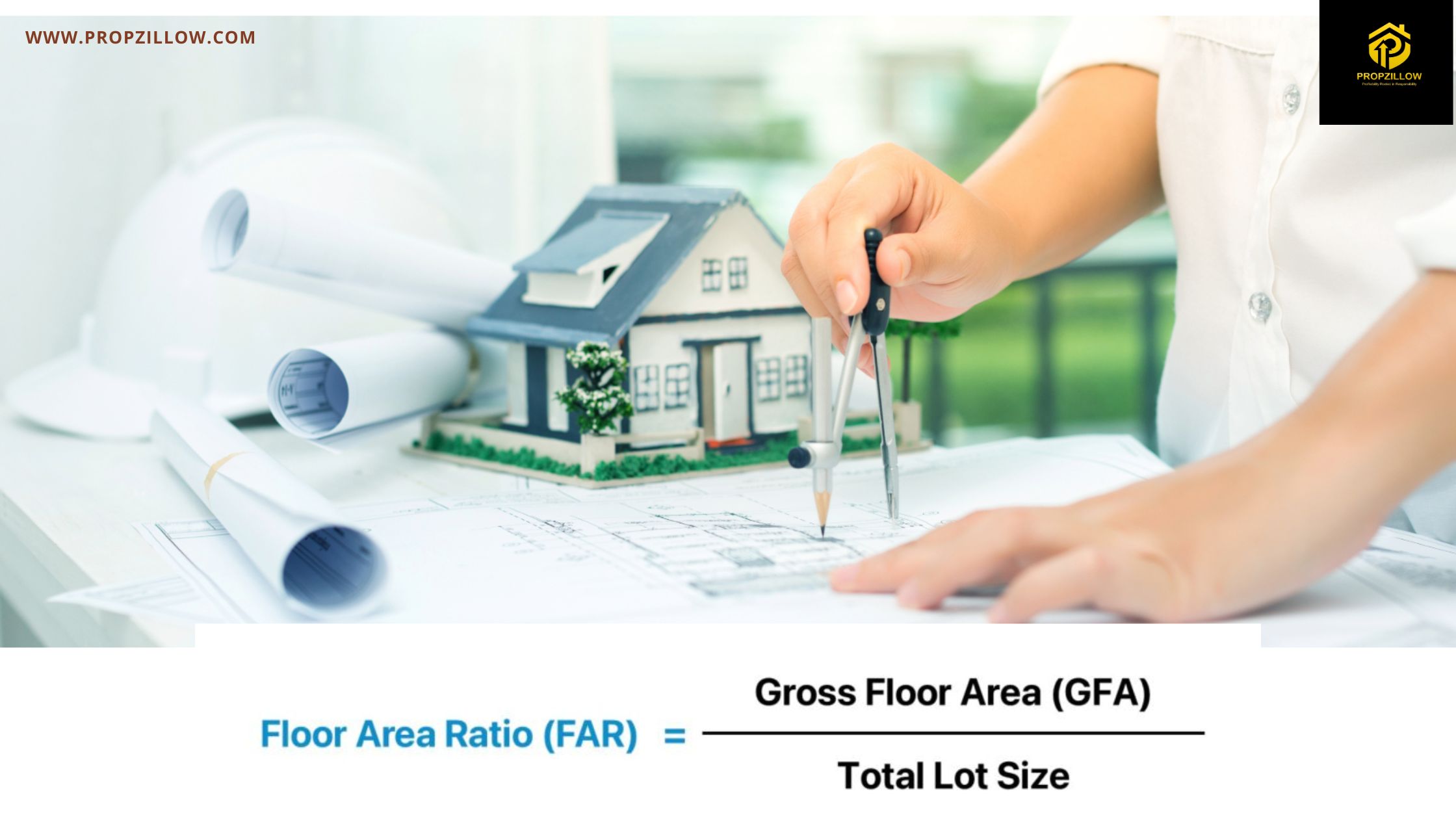
In the world of real estate and urban planning, FAR stands for Floor Area Ratio. It is one of the most critical metrics used by local governments to regulate how much “building” can actually be placed on a specific piece of land. Think of it as the “density limit” for a property.
1. What Does FAR Mean?
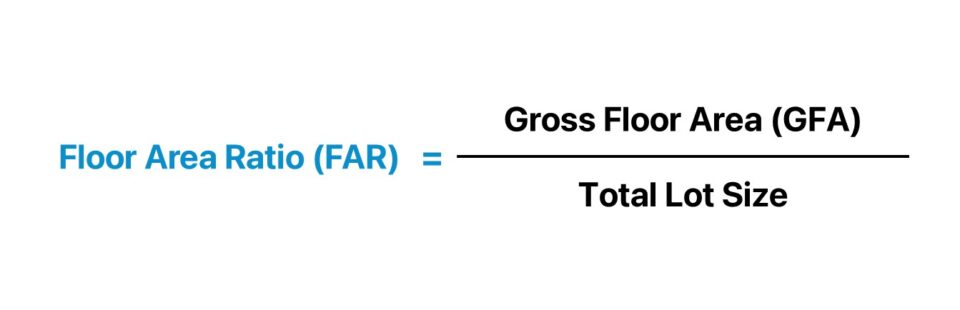
The floor area ratio is the relationship between the total amount of usable floor space in a building and the total area of the plot of land it sits on. It is expressed as a decimal or a ratio (e.g., 1.0, 2.5, or 4.0). The higher the FAR, the more “built-up” or dense a project can be.
The Basic Formula
FAR = Total Gross Floor Area of Building. Total Area of the Lot
- How FAR Works in Practice
The best way to understand FAR is to see how the same ratio can result in different building shapes.
If the FAR is 1.0:
- You could build a one-story building that covers the entire lot.
- You could build a two-story building that covers half the lot.
- You could build a four-story building that covers one-quarter of the lot.
If the FAR is 0.5:
- You can only build a floor area equal to half the size of the land. This usually results in smaller homes with large yards (suburban feel).
If the FAR is 10.0:
- This ratio is common in high-density areas like Manhattan or Tokyo, allowing for massive skyscrapers on relatively small plots of land.
3. What is the Use of FAR?
Zoning boards and city planners use FAR for several strategic reasons:
- Controlling Density: It prevents overcrowding in residential areas and ensures that the local infrastructure (roads, water, sewage) can handle the number of people living or working there.
- Preserving “Light and Air”: By limiting FAR, cities can ensure that buildings aren’t so packed together that they block all sunlight from reaching the street level.
- Defining Neighborhood Character: FAR helps maintain a consistent “vibe.” A low FAR ensures a neighborhood remains leafy and suburban, while a high FAR encourages a bustling, urban skyline.
- Property Valuation: For developers, FAR is the “magic number.” A plot of land with a high FAR is significantly more valuable than the same-sized plot with a low FAR, because the developer can build (and sell or lease) more square footage.
4. Key Distinctions
It is important not to confuse FAR with building coverage:
- Building Coverage: Limits how much of the ground the building’s “footprint” can take up (e.g., “You can only cover 40% of the land”).
- FAR: Limits the total square footage across all floors combined.
Note for 2026: In many modern “green cities,” developers are often granted “FAR bonuses”—allowing them to build extra floors beyond the limit—if they include sustainable features like rooftop gardens, affordable housing units, or public transit hubs.
Would you like to see a calculation example for a specific type of property, or are you curious about how “Transferable Development Rights” (TDR) allow owners to sell their FAR to other lots?



Join The Discussion