
In 2026, the comparison between Jhajjar and Gurgaon (now Gurugram) has shifted from speculation to a tangible development cycle. While Jhajjar is following the “Gurgaon growth blueprint,” it is doing so with a distinct focus on heavy industry and logistics rather than just white-collar services.
The National Capital Region (NCR) is witnessing a paradigm shift. Just as Gurgaon redefined the corporate landscape of India over the last two decades, Jhajjar is now emerging as the next frontier of high-density integration and innovation.
The Three-Phase Evolution🔸
- 2011: The Rural Foundation – A decade ago, Jhajjar was defined by its agrarian roots. Development was limited, and the economy was driven by local agriculture and small-scale settlements.
- 2026: The Industrial Catalyst – Today, the transformation is in full swing. With the establishment of the Jhajjar-Gurugram Logistics Hub and Reliance MET City, the region has become a critical node in India’s supply chain. Infrastructure investment has surged, creating a massive industrial base that acts as the region’s economic engine.
- 2035: The Sustainable Metropolis – The vision for 2035 represents a “Gated Sustainable Metropolis.” This includes specialized Global Medical Innovation Hubs, Tech-Education Cities, and integrated urban cores connected by high-speed transit.
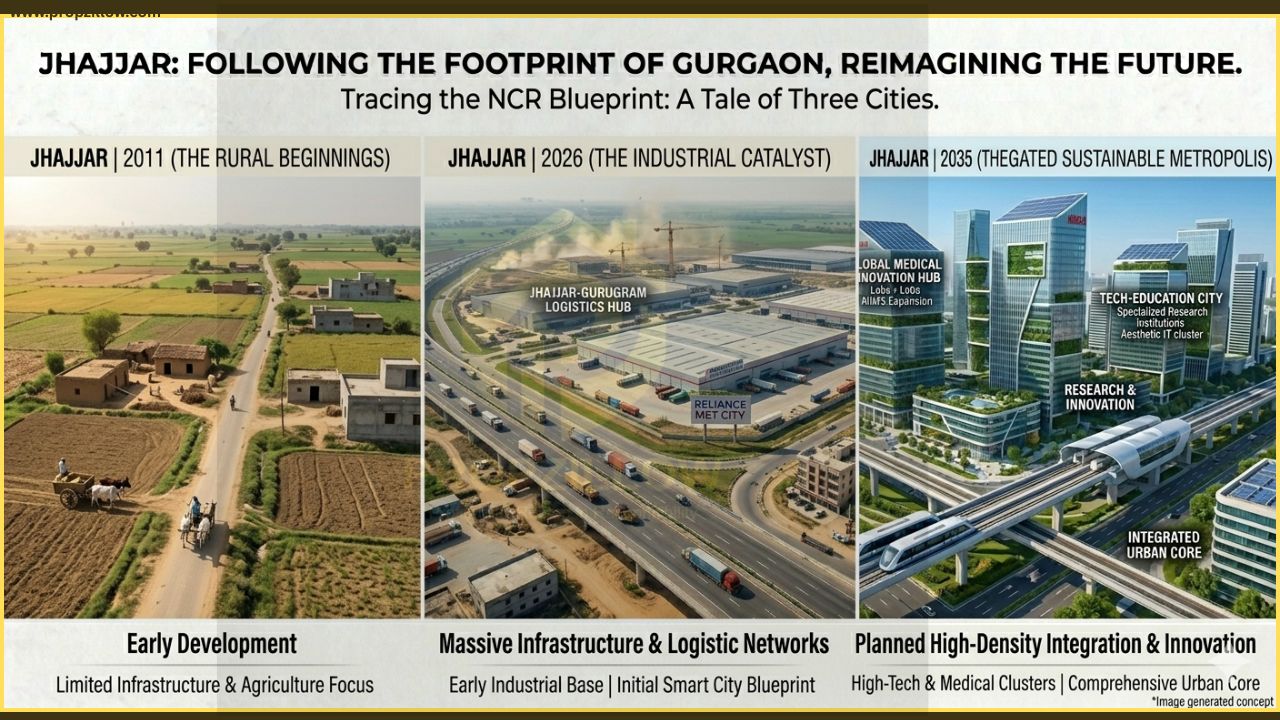
Jhajjar is following the footprint of Gurgaon, but with a greener, smarter, and more integrated twist. The future is closer than it looks! 🚀
- 🌉Logistics Power: The region is part of the Delhi-Mumbai Industrial Corridor (DMIC) influence zone.
- 🏙️Reliance MET City: Spans over 8,000+ acres, making it one of India’s largest private business districts.
- 🚝Connectivity: The 2026-2035 vision relies heavily on proximity to the KMP Expressway and the Dwarka Expressway, significantly cutting travel time to IGI Airport to under 45 minutes.
In 2026, the government’s strategy for Jhajjar is less about creating a “second Gurgaon” and more about building a complementary industrial twin. While Gurgaon remains the administrative and IT corporate hub, the Haryana government is actively positioning Jhajjar as the state’s logistics and manufacturing powerhouse.
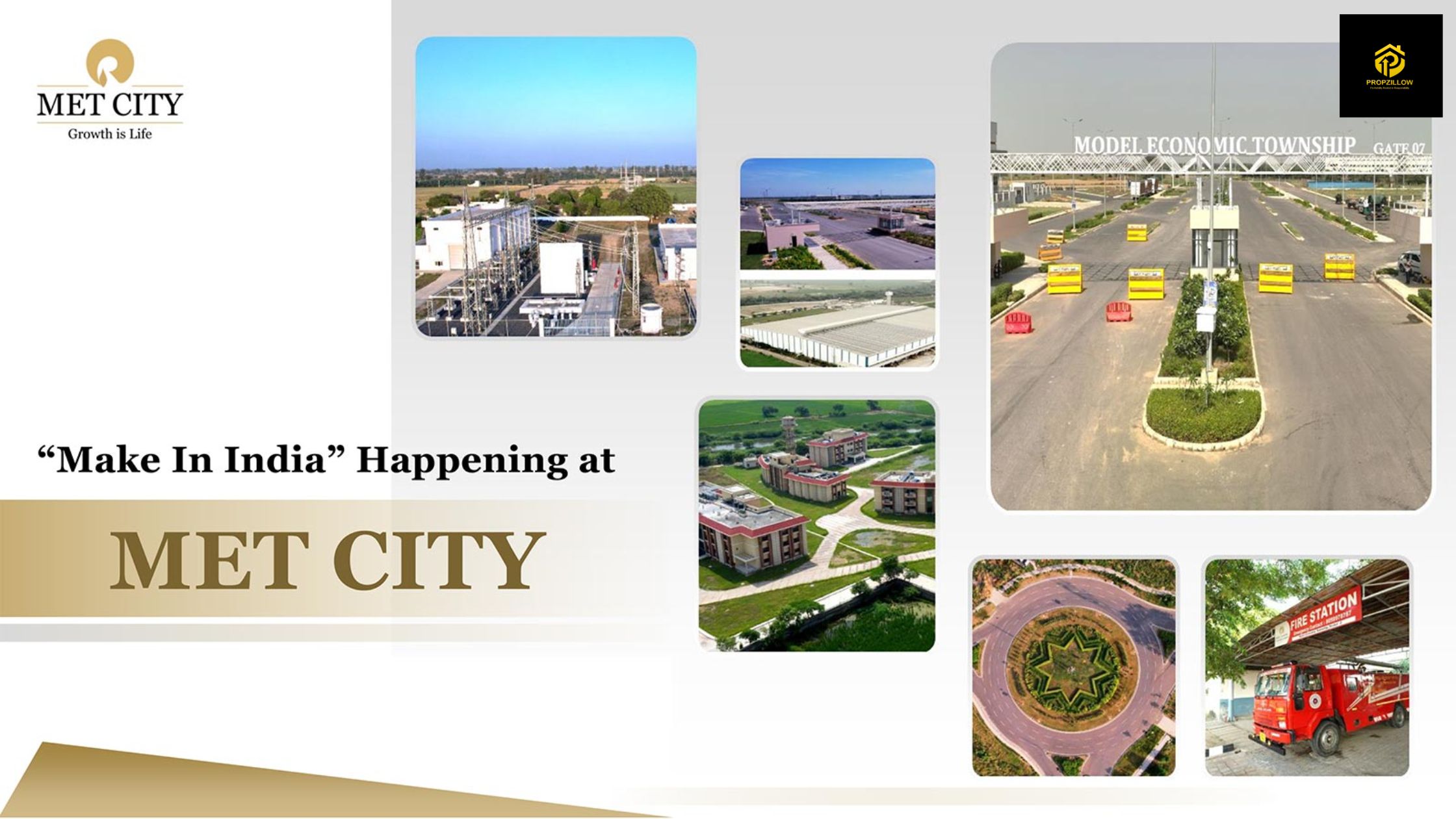
The government isn’t trying to build another city of skyscrapers. They are building a planned industrial successor. In 2026, residents and investors view Jhajjar as the “industrial backyard” of Gurgaon, rapidly transforming into a prime location for economic appreciation.
🔖For investors and urban planners, Jhajjar isn’t just a satellite town; it’s the future of smart, sustainable living in Northern India.




Join The Discussion